
Confirm the download source
Verify the address and avoid sponsored clones before accessing an installer.
Read guide ↗🔐 Your keys. Your decisions.
Explore a wallet experience built around self-custody concepts: local credentials, multi-chain visibility, deliberate transaction review and a recovery plan that starts on day one.
Explore our principles ↗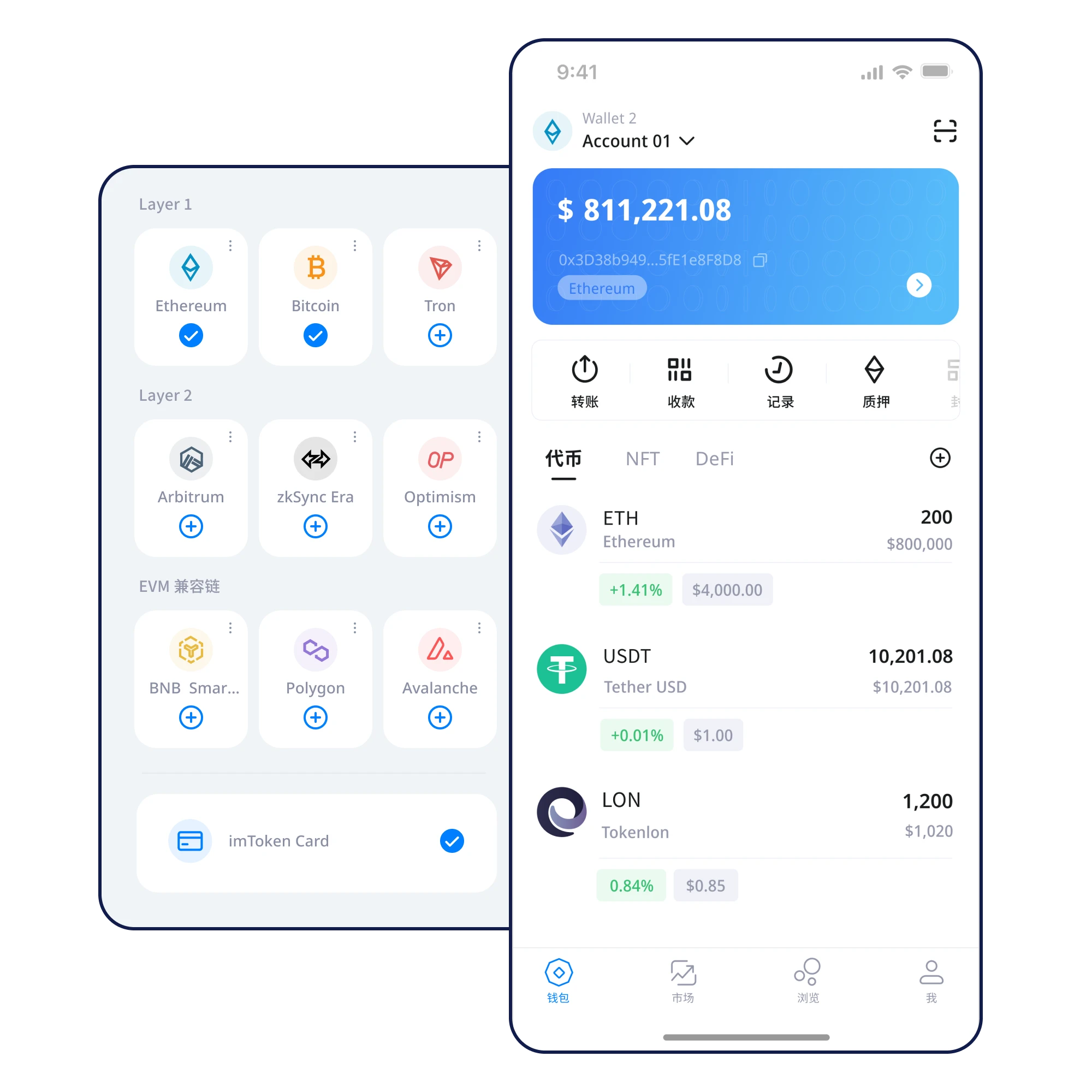
Keep credentials private
Back up before moving funds
Review every signature
Never share recovery phrases
Interface / illustrative preview
Illustrative BTC, ETH and USDT rows show how assets and network context can be presented together. Figures are fictional UI examples, not live balances or claims of product availability.
Getting started / six steps
Verify the address and avoid sponsored clones before accessing an installer.
Read guide ↗Decide whether to create or import and use a trusted device.
Read guide ↗Write every word privately and check its order; never take a screenshot.
Read guide ↗Store the record away from your daily device and check readability.
Read guide ↗Use network labels to distinguish assets with similar names.
Read guide ↗Compare recipient, chain, asset, amount and fees before signing.
Read guide ↗01 / Key capability
Local key management makes credential protection a user responsibility. Explore the roles of device security, backups and transaction review.
02 / Key capability
Recovery should happen on a trusted device, never through a support chat or web form. Follow a careful sequence to regain access.
03 / Key capability
Check the chain, recipient address, asset and amount before signing. This guide helps you build a reliable final-review routine.
Keep sensitive phrases private and offline.
Review the chain, recipient and allowance every time.
Understand recovery before replacing a device.
Explore the guides
Practical information organized around actions, not a crowded article feed.
Everyday scenarios
The same token name does not mean assets share the same network.
Learn about assets ↗Start with a trusted device and a private place to record recovery details. This guide covers what to check before you create or import a wallet.
Read guide ↗Moving phones does not move on-chain assets. Prepare your backup, restore carefully and clear sensitive data from retired hardware.
Read guide ↗Fake downloads, malicious approval prompts and impersonated support can lead to loss. Learn practical signs to spot and review.
Read guide ↗Spot · Check · Act
Self-custody means you are responsible for controlling recovery credentials. Verify the exact behavior of any product version you use.
Checking on-chain balances generally requires a network connection. Recovery phrase storage should remain offline.
Write the words in order on an offline medium and protect the backup from damage, discovery and online exposure.
A private key typically signs for an account; a recovery phrase may restore multiple accounts. Both must remain secret.
Before you begin, review the safety basics
Verify the source before installing. Back up offline before moving assets. Never share your recovery phrase.
⬇ Download Now